In recent weeks, ILRI has signed collaborative research agreements in China, India and Vietnam. These build on several years of past engagement and aim to deepen ILRI’s work in these and other countries in Asia. Continue reading
Category Archives: Story Type
Mixing it up—The information ‘black hole’ on crop+animal recipes for climate-smart and climate-resilient farms
We are unaware of any comprehensive studies undertaken in sub-Saharan Africa to explore how mixed farms will be affected by climate change and the cost and benefits of different adaptation options. Underestimating the importance of livestock in the mixed’ smallholder farming systems that are ubiquitous across the developing world weakens both emissions reduction and climate change adaptation efforts. Continue reading
New DNA analysis of Asian sheep reveals unique diversity crucial to contemporary food and climate concerns
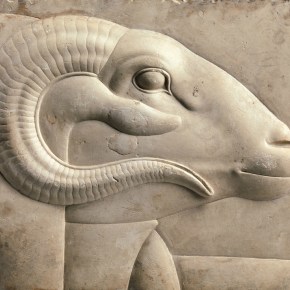
At a time when the price of mutton is climbing and wool crashing, a groundbreaking new study has used advanced genetic sequencing technology to rewrite the history of sheep breeding and trading along the ancient Silk Road—insights that can help contemporary herders in developing countries preserve or recover valuable traits crucial to their food and economic security. The new findings regarding one of the first animals ever domesticated will be published in the October print edition of the journal Molecular Biology and Evolution. They are the product of an unprecedented collaboration involving scientists in China, Iran, Pakistan, Indonesia, Nepal, Finland, and the United Kingdom. The team analysed the complete mitochondrial DNA of 42 domesticated native sheep breeds from Azerbaijan, Moldova, Serbia, Ukraine, Russia, Kazakhstan, Poland, Finland, China and the United Kingdom, along with two wild sheep species from Kazakhstan. Continue reading
New study recommends continued research on the possible role pigs could play in transmitting Ebola in Uganda
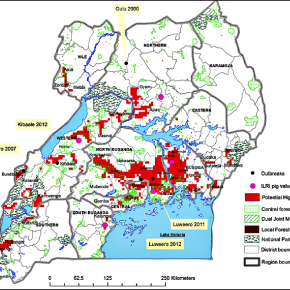
A new risk assessment paper, Assessing the potential role of pigs in the epidemiology of the Ebola virus in Uganda, was published in the science journal Transboundary and Emerging Diseases on 27 Aug 2015. The authors are scientists at the International Livestock Research Institute (ILRI). Presently, there is no solid evidence that pigs have any role in the past outbreaks of Ebola virus disease. But the risk assessment paper indicates that further research on the role pigs may play in Ebola virus transmission in Uganda is warranted. Continue reading
Ways forward for food safety in countries bearing the brunt of the world’s food-borne diseases
A new paper on food safety in low- and middle-income countries was published today by ILRI’s Delia Grace. The paper is based on a longer learning resource commissioned for the UK Department for International Development (DFID), which will be out shortly. Both publications reflect what ILRI and its partners have learned over the last 10 years since adopting a framework of risk analysis for assessing, managing and communicating about food safety. Continue reading
Bridging ‘biobanking’ and biomedical research across Europe and Africa: ‘B3Africa’ launched in Cape Town
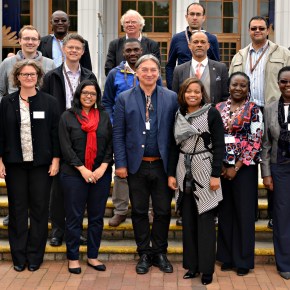
The first meeting of a new project, ‘B3Africa, short for ‘Bridging Biobanking and Biomedical Research across Europe and Africa’, was held this week (24–25 Aug 2015) at the University of the Western Cape, in Cape Town, South Africa. Continue reading
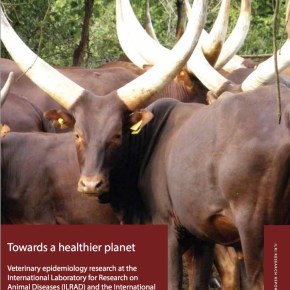
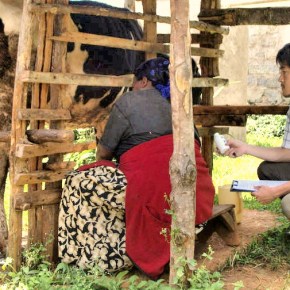
‘Soft’ science at ILRAD/ILRI: A lively look back at three decades of veterinary epidemiology for development
For almost thirty years, the International Laboratory for Research on Animal Diseases (ILRAD) then ILRI benefited from a strong research program in the epidemiological sciences. Over time, it progressively broadened its coverage in disease, disciplinary and geographic terms. The results of this work have now been assembled in this impact narrative, which carefully documents the wide range of issues addressed by the teams of researchers, and presents them in an illustrated and highly readable format. Continue reading
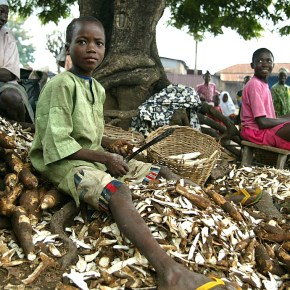
All flesh is grass (except in Nigeria, where it might be cassava peel)
Scientists are developing a way of transforming the mountains of cassava peels created every day in Nigeria, where cassava is a staple food, into a nourishing feed for smallholder farm animals. The several CGIAR centres involved include the International Livestock Research Institute (ILRI), the International Institute for Tropical Agriculture (IITA) and the International Potato Center (CIP). Also involved in this project are several CGIAR research programs—Livestock and Fish; Integrated Systems for the Humidtropics; and Roots, Tubers and Bananas—as well as the Global Cassava Partnership for the 21st Century (GCP21). Continue reading
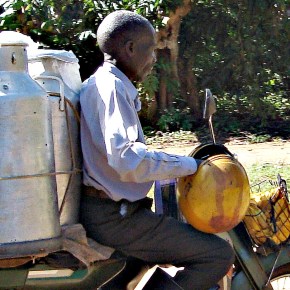
Towards professionalizing—not criminalizing—informal sellers of milk and meat in poor countries
Researchers from ILRI and partners have developed and piloted an institutional innovation—a training, certification and branding scheme for informal value chain actors—with good potential to improve the safety of animal-source foods sold in informal markets. Past development policy often focused on formal markets, which at best meant neglect of informal markets and often resulted in harassment and penalties for informal agents. Continue reading
Reducing human exposure to aflatoxins in poor countries: Towards new technologies and practices
A new paper describes and assesses the strength of a theory of change for how adoption of farm-level technologies and practices for aflatoxin mitigation can contribute to reductions in aflatoxin exposure among consumers in a market context. Continue reading