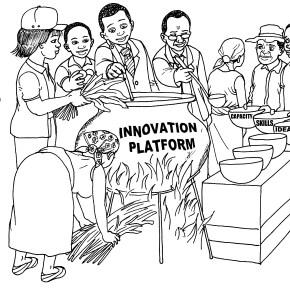
Multi-stakeholder or innovation platforms are increasingly seen as a promising vehicle for agricultural innovation and development. In the field of agricultural research for development (AR4D), such platforms are an important element of a commitment to more intentional, structured and long-term engagement among sector stakeholders. See ILRI capacity development brief 5, Capacity development, and innovation systems … Continue reading
Category Archives: ILRI
Developing future leaders in research, ILRI’s graduate fellows program
The International Livestock Research Institute (ILRI) graduate fellowship program has grown from strength to strength. In 2015, ILRI offered opportunities to more than 200 young scientists and graduate fellows from national agricultural research organizations (NARS), universities and other partner institutions globally. These emerging researchers undertake research for development activities within ILRI projects, access ILRI research facilities and are mentored by ILRI senior scientists, themselves engaged in cutting-edge agricultural research. Continue reading
Briefs on capacity development experiences at the International Livestock Research Institute
As part of an internal ‘capacity development’ week at the International Livestock Research Institute (ILRI) in December 2015, the institute launched a series of capacity development briefs covering different aspects of this work. Continue reading
Can we eat meat and still reduce greenhouse gas emissions?
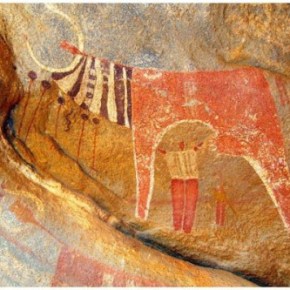
Cattle and figures, Laas Geel cave complex, Somaliland, Somalia. This opinion piece is written by Alain Vidal, director of strategic partnerships at CGIAR. Our global food production system—which includes, in addition to crop farming, raising livestock and deforesting lands to grow livestock feed and other crops—is responsible for about a quarter of the greenhouse gases produced … Continue reading
No longer business as usual: Improved feeds transforming dairying in Zimbabwe
Farmers participating in the Zimbabwe Crop-Livestock Integration for Food Security (ZimCLIFS) project have increased their gross margins by up to 70%. The ongoing food security improvement project is targeting the country’s dairy farmers to help improve feed farming and overall dairy production. Continue reading
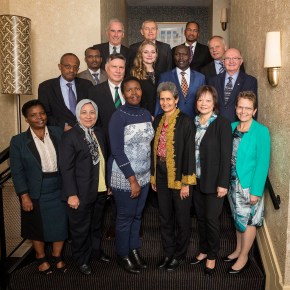
ILRI Board of Trustees meets in Washington DC
The 44th ILRI Board of Trustees meeting took place in Washington DC from 31 October to 4 November 2015. This latest meeting saw a number of changes on the ILRI board, as three members left, three joined, and Lindsay Falvey become board chair. Continue reading
A couple of ‘missings’ for the Paris climate talks
In the days leading up to the start of the climate change talks in Paris (COP21) this week (30 Nov–11 Dec 2015), we at the International Livestock Research Institute (ILRI) have been busy responding to recent articles in the press advocating that ‘the world’ eat less meat to reduce greenhouse gases and other livestock ‘bads’. … Continue reading
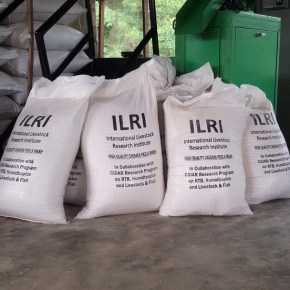
Processing African cassava peels, potentially a billion dollar business
With livestock production expected to more than double in the next 40 years, transforming cassava peels into high quality feed holds huge potential for African economies struggling to meet rapidly rising demand for animal-source products, according to research proposal recently published by three CGIAR centres. Continue reading
Climate-smart livestock farming in developing countries is boosted by a £10-million research award
Researchers at the Roslin Institute will be using funds from the Bill & Melinda Gates Foundation to investigate how genetic information can improve the health and productivity of farmed animals in tropical climates, which is a proven approach to climate change mitigation and adaptation. The Centre for Tropical Livestock Genetics and Health is an alliance between the Institute at the University of Edinburgh, Scotland’s Rural College (SRUC) and the Africa-headquartered International Livestock Research Institute (ILRI). The partner institutions are making additional contributions with a value of £10 million to support the initiative over the next five years. Continue reading
Roots, tubers and banana plants: Next-generation pig feeds for Uganda
The authors call for further exploration of strategies to conserve root, tuber and banana crop residues during the harvest period to reduce waste and improve incomes for smallholder pig farmers in Uganda. Continue reading