Research to improve the health and productivity of farmed animals in tropical climates has received a £4 million boost from the UK Government. The investment from DFID was announced by the Secretary of State for International Development, Penny Mordaunt, during a visit to the University of Edinburgh. It will support research in the Centre for Tropical Livestock Genetics and Health—a joint venture between the University of Edinburgh’s Roslin Institute, SRUC, ILRI, the latter of which has major research facilities in Kenya and Ethiopia. Continue reading
Category Archives: Pro-Poor Livestock
Sustainable livestock futures—BMZ, GIZ and ILRI at the Global Forum for Food and Agriculture this week
For several days this week (18–20 Jan 2018), several scientific directors and staff of the International Livestock Research Institute (ILRI)—Jimmy Smith, Shirley Tarawali, Dieter Schillinger, Lutz Merbold and Kristina Roesel—will be participating with several ILRI partners in the Global Forum for Food and Agriculture (GFFA), held in Berlin, Germany. This annual German three-day international conference focuses on the future of the global agri-food industry. Now in its tenth year, the GFFA in 2018 is focusing on Shaping the Future of Livestock—Sustainably, Responsibly, Efficiently. Continue reading
ILRI’s Kapiti livestock research station—and Kenyan and global public goods—imperiled by land grabs in Kenya
Over the past several weeks, illegal attempts to grab land have escalated at Kapiti Plains Estate (‘Kapiti’, or ‘Kapiti research station’), located about 60 km southeast of Nairobi along Mombasa Road, in Machakos County. Members of groups involved in the illegal sales have started trespassing and building illegal structures on Kapiti research station. No land at Kapiti is for sale. Continue reading
Gates Foundation grants Feed the Future Innovation Lab for Livestock Systems USD8.7 million to improve human nutrition in Burkina Faso and Ethiopia
The University of Florida has been awarded USD8.7 million from the Bill & Melinda Gates Foundation to fund livestock research over the next five years to tackle high rates of food insecurity and undernutrition in two of Africa’s landlocked nations—Burkina Faso, in the west, and Ethiopia, in the east. Continue reading
A 360-degree ‘immersive dive’ into Uganda’s smallholder pig sector
As part of ILRI’s quest to pilot new technologies for better communication of its work, the institute’s Capacity Development Unit recently worked with scientific and staff based in Uganda to produce CGIAR’s first-ever 360-degree video, which offers glimpses into an ordinary day in the life of a Ugandan pig farmer, trader and consumer. Continue reading
Tanzania livestock master plan projects the creation of nearly two million jobs
Development assistance has long since slipped down in the agenda of African officials. With rapid economic growth forecast, priorities now focus on increasing productivity and investment. And in Tanzania, where approximately 37% of the rural households possess cattle, chicken, goats, pigs and sheep, livestock is officially at the centre of that debate. Continue reading
Beyond meat and methane—Advocating for sustainable livestock production
A Global Livestock Advocacy for Development (GLAD) project is distilling evidence around livestock ‘goods’ and ‘bads’, reaching out to UN and other global policy processes and events, engaging global media and developing a group of champions—individuals capacitated to make the case for sustainable livestock. Continue reading
Imposing user fees on veterinary antimicrobials is a plausible way to curb antimicrobial use in food animals
New research findings suggest that imposing a user fee on veterinary antimicrobials is a plausible policy option to achieve meaningful reductions in antimicrobial use in the short term while simultaneously raising funds to improve farming practices that will benefit the long-term viability of the livestock industry. Continue reading
Sense of an ending—Imperatives for delivering research with the (SDGs) end in mind
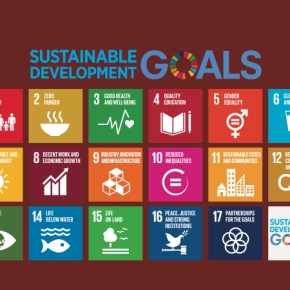
Speaking last week at the opening of the annual meeting of the Centre for Tropical Livestock Genetics and Health (CTLGH), ILRI Director General Jimmy Smith reminded his scientific audience of the specific livestock means by which the world can meet their ambitious goals. The four livestock development pathways Smith describes for meeting the SDGs—economic growth, equitable livelihoods, nutrition and health, ecosystem health—(see below) are largely unknown outside of the South, where they are taken for granted. Time for that to change, Smith said. Time for livestock researchers to conduct their science ‘with the end in mind’. Continue reading
Closer, smarter integration of crops, animals and soils has bolstered food security, livelihoods and incomes in rural Zimbabwe
Partners and funders of a research-for-development project in rural Zimbabwe called ‘ZimCLIFS’ yesterday (18 Sep 2017) convened in the capital, Harare, to take stock of how small-scale mixed crop-and-livestock farmers improved their food and nutritional security and their livelihoods in four main districts (Goromonzi, Murewa, Gwanda and Nkayi, from 2012 to 2017) and in two spillover districts (Mutoko and Uzumba, from 2015 to 2017). Continue reading