ILRI’s Jimmy Smith on farm animal diversity for more sustainable and resilient global food systems
Animal Breeding / Animal Feeding / Biodiversity / Breeds / Climate Change / Event Report / Forages / Genetics / Geodata / ILRI / Indigenous Breeds / LiveGene / LIVESTOCKCRP / Presentation / Pro-Poor Livestock / Resilience / Spotlight

ILRI’s Jimmy Smith on farm animal diversity for more sustainable and resilient global food systems

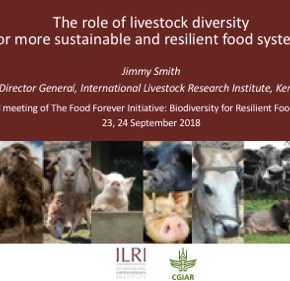
Jimmy Smith, director general of the International Livestock Research Institute (ILRI), this week made a short presentation at the annual meeting of the Food Forever Initiative held in Wilmington, Delaware, 23–24 Sep 2018. Food Forever is a global partnership to raise awareness on the importance and urgency of conserving and using agricultural biodiversity. Smith is one of 30 Food Forever champions advocating this important cause. Smith spoke on the central importance of better conserving, characterizing and using the world’s remaining livestock diversity to ensure future food security in the face of climate and other changes. Continue reading
German agroecological livestock research investments are benefiting both people and the planet
A4NH / Agri-Health / Agriculture / AHH / Animal Health / ASF / BecA / Biotechnology / CBPP / CCAFS / CGIAR / Climate Change / Dairying / Diagnostics / Directorate / Environment / Event Report / FFD / Food Safety / Forages / Genetics / Germany / ILRI / LiveGene / LIVESTOCKCRP / Mazingira / Pro-Poor Livestock / Research / Seeds / SLS / Spotlight / Vaccines

German agroecological livestock research investments are benefiting both people and the planet

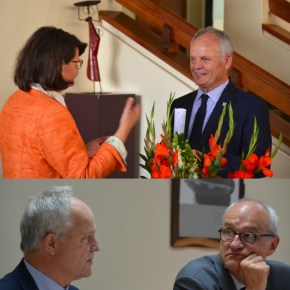
ILRI was honoured this week (3 Sep 2018) to host a high-level German delegation including Maria Flachsbarth, parliamentary state secretary to Germany’s federal minister for economic cooperation and development, and Stefan Schmitz, deputy director of the Federal Ministry of Economic Cooperation and Development (BMZ), as well as senior staff of the Kenya Ministry of Agriculture, Livestock, Fisheries and Irrigation, including Andrew Tuimur, chief administrative secretary, and Ann Onyango, agriculture secretary; and representatives from several other CGIAR centres working in Kenya, including Tony Simons, director general of ICRAF, and representatives from the Nairobi-based International Centre of Insect Physiology and Ecology (icipe). Continue reading

Deadly African swine fever arrives in China, the world’s largest producer of pigs
Agri-Health / AHH / Animal Health / ASF / China / Epidemiology / Event / ILRI / LIVESTOCKCRP / Pigs / Spotlight / Vaccines

Deadly African swine fever arrives in China, the world’s largest producer of pigs

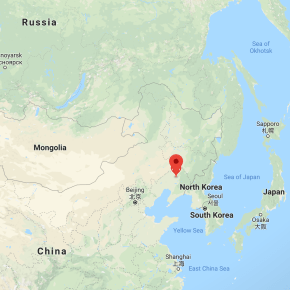
Long feared, it’s now finally happened. African swine fever (ASF), an infectious and highly lethal viral disease of pigs, has for the first time reared its head in China. Just two weeks ago, African swine fever was confirmed as the cause of death of pigs on a small farm in Shenyang City, in Liaoning Province, located in the northeast, bordering North Korea and the Yellow Sea. Continue reading

Aspen New Voices Fellows Andrew Mude and Jemimah Njuki tell of the moments their ag careers ‘took off’
Africa / Agriculture / Communications / Drylands / Event Report / Film and Video / Gender / IBLI / ILRI / Insurance / Kenya / LIVESTOCKCRP / Research / SLS / Spotlight / Staff / Women

Aspen New Voices Fellows Andrew Mude and Jemimah Njuki tell of the moments their ag careers ‘took off’

For your viewing and listening pleasure, here are two short video ‘stories’ by two great agricultural-research-for-development storytellers. Continue reading

When ‘Do no harm’ is harder than ‘doing good’
Animal Feeding / Cattle / Dairying / Drought / Drylands / East Africa / Fodder / Food Security / Gender / Goats / ILRI / Intensification / LIVESTOCKFISH / Pastoralism / PIL / Pro-Poor Livestock / Project / Rangelands / Resilience / Sheep / Small Ruminants / Spotlight / Tanzania / Women

When ‘Do no harm’ is harder than ‘doing good’

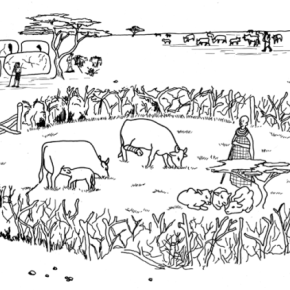
Agricultural researchers working to enhance traditional pasture conservation by Tanzania’s pastoral Maasai communities are systematically addressing gendered norms and roles to ensure that they don’t end up hurting more than helping these communities. Continue reading

How changing the world’s food systems can help to protect the planet
Agriculture / Animal Breeding / Cattle / CCAFS / Climate Change / Environment / ILRI / LiveGene / Livestock / Mazingira / News clipping / Opinion Piece / Spotlight

How changing the world’s food systems can help to protect the planet

Food systems must be transformed to produce more nutritious food with a lower environmental footprint. There are a number of initiatives around the world working towards this end. Here are just five that use different kinds of science—from smart approaches to breeding livestock and crops to recycling wastewater—that could help humans settle their growing debt to the planet. Continue reading

Reducing use of antimicrobial drugs in livestock in low-income countries: Two scientists reflect on options
Agri-Health / AHH / AMR / Animal Health / Disease Control / Emerging Diseases / Environment / Epidemiology / Human Health / ILRI / Interview / Policy / Pro-Poor Livestock / Spotlight / Vaccines

Reducing use of antimicrobial drugs in livestock in low-income countries: Two scientists reflect on options

Delia Grace Randolph, a veterinary epidemiologist and food safety expert who co-leads the Animal and Human Health program at ILRI, was interviewed recently by Wilton Park, a non-profit discussion centre in the UK. The event at which Grace spoke was a workshop held 11–13 Apr 2018 in West Sussex on Innovations to reduce the use of antimicrobials in food-producing animals in low- and middle-income countries. Continue reading

Introducing English and Swahili instructional videos on the patterns, signs, symptoms and control of Rift Valley fever
AHH / Animal Health / Cattle / Disease Control / Drylands / East Africa / Emerging Diseases / Epidemiology / Film and Video / Human Health / ILRI / Kenya / News clipping / Policy / RVF / Sheep / Spotlight / Vaccines

Introducing English and Swahili instructional videos on the patterns, signs, symptoms and control of Rift Valley fever

Originally posted on ILVAC:
Written by Bernard Bett Several outbreaks of Rift Valley fever in livestock and people have occurred in eastern Africa over the last three months or so. In the first week of June 2018, local media reported at least five fatal human cases in Kenya’s northern Wajir County. More suspected cases in…

Livestock-enhanced diets in the first 1,000 days of life: Pathways to better futures in low-income countries
A4NH / Advocacy / Agri-Health / AHH / Animal Products / Consumption / Food Security / Human Health / ILRI / Launch / LIVESTOCKCRP / Nutrition / Policy / Poverty / Presentation / Spotlight / Vulnerability / Women

Livestock-enhanced diets in the first 1,000 days of life: Pathways to better futures in low-income countries

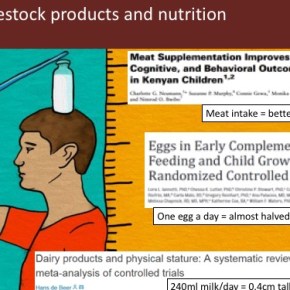
A new report was published this month on the value of ensuring consumption of meat, milk and eggs by infants up to two years of age and by expectant and new mothers in developing countries (the first 1,000 days). The report was published by ILRI and the Chatham House Centre on Global Health Security. Highlights of the findings of this joint ILRI-Chatham livestock study were presented at a side event at the EAT Stockholm Food Forum on 11 Jun 2018. Continue reading

How closing livestock yield gaps can enhance incomes, food security and the environment in Ethiopia and India
Animal Feeding / Animal Health / Animal Production / Dairying / East Africa / Ethiopia / Feeds / ILRI / India / Markets / Policy / Pro-Poor Livestock / Report / South Asia / Spotlight / Vaccines

How closing livestock yield gaps can enhance incomes, food security and the environment in Ethiopia and India

Estimates of livestock yield gaps are not available and these are necessary for developing feasible scenarios of how the production of different livestock commodities might evolve in the future, how systems might change and what would be the resource use implications and their costs, both for donors and for public and private entities in target countries. Continue reading