Over the past several weeks, illegal attempts to grab land have escalated at Kapiti Plains Estate (‘Kapiti’, or ‘Kapiti research station’), located about 60 km southeast of Nairobi along Mombasa Road, in Machakos County. Members of groups involved in the illegal sales have started trespassing and building illegal structures on Kapiti research station. No land at Kapiti is for sale. Continue reading
Category Archives: Species
Gates Foundation grants Feed the Future Innovation Lab for Livestock Systems USD8.7 million to improve human nutrition in Burkina Faso and Ethiopia
The University of Florida has been awarded USD8.7 million from the Bill & Melinda Gates Foundation to fund livestock research over the next five years to tackle high rates of food insecurity and undernutrition in two of Africa’s landlocked nations—Burkina Faso, in the west, and Ethiopia, in the east. Continue reading
A 360-degree ‘immersive dive’ into Uganda’s smallholder pig sector
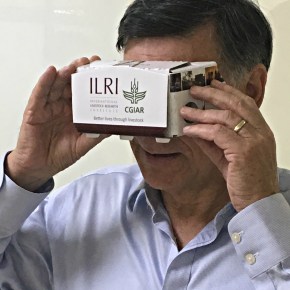
As part of ILRI’s quest to pilot new technologies for better communication of its work, the institute’s Capacity Development Unit recently worked with scientific and staff based in Uganda to produce CGIAR’s first-ever 360-degree video, which offers glimpses into an ordinary day in the life of a Ugandan pig farmer, trader and consumer. Continue reading
Scaling up use of livestock technologies in Mali—progress of a Feed the Future program
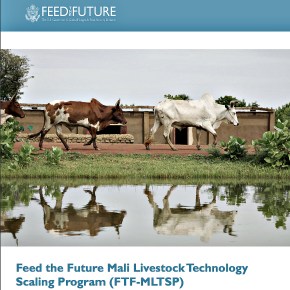
The most recent progress report from the Feed the Future Mali Livestock Technology Scaling Program describes some successes and swift progress made in recent months towards achieving these goals as well as some new challenges the program is facing. Continue reading
Closer, smarter integration of crops, animals and soils has bolstered food security, livelihoods and incomes in rural Zimbabwe
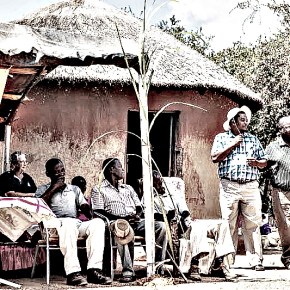
Partners and funders of a research-for-development project in rural Zimbabwe called ‘ZimCLIFS’ yesterday (18 Sep 2017) convened in the capital, Harare, to take stock of how small-scale mixed crop-and-livestock farmers improved their food and nutritional security and their livelihoods in four main districts (Goromonzi, Murewa, Gwanda and Nkayi, from 2012 to 2017) and in two spillover districts (Mutoko and Uzumba, from 2015 to 2017). Continue reading
Hanoi workshop held on providing safer pork products in Vietnam
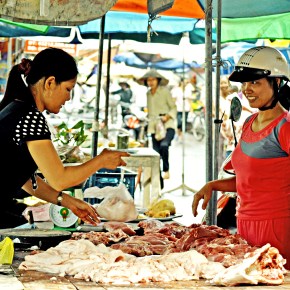
A two-day workshop, 7–8 Sep 2017, on the topic of ‘Improving food safety along the pork value chain—lessons learned and ways forward’. The workshop consisted of two parts: (1) the closing of a project on ‘Reducing disease risks and improving food safety in smallholder pig value chains in Vietnam’, known as PigRISK, and (2) the launching of a project on ‘Market-based approaches to improving the safety of pork in Vietnam’, known as SafePORK Continue reading
Lifetime performance of West African dwarf goats under different feeding systems
An article in ‘Animal’ compares the lifetime performance (mortality, maturity, nutrition, birth weight etc.) of West African Dwarf goats kept under various feeding systems. Continue reading
Pig farmers to earn more through new genetics project in Uganda
A newly launched pig genetics project seeks to increase the productivity and profitability of the Ugandan smallholder pig enterprises by developing a genetic improvement strategy to ensure the availability and accessibility of appropriate pig breeds. Continue reading
Following the vaccine that wiped out rinderpest, a new vaccine against sheep and goat plague proves promising
A new paper by researchers at ILRI describes development of an effective experimental and thermostable vaccine against ‘peste des petits ruminants’, or PPR for short, a disease more commonly known as sheep and goat plague. Continue reading
India’s Odisha State and ILRI join forces to improve livestock feeding and mechanization
A three-year ILRI-Odisha State project, ‘Feed and Fodder Production in Different Agro-Climatic Zones and its Utilization for Livestock of Odisha,’ which is worth more than USD2 million (INR18.08 crore), will map feed and fodder supply and demand, improve feeding practices and build capacity of key players in the feed value chain in the state. Continue reading