More than Ksh214 million is on tap for 12,000 pastoral households in six counties of northern Kenya through innovative policies that use satellite imagery to trigger payments for feed, veterinary supplies and water. Continue reading
Category Archives: Cattle
Kenya’s wildlife populations are in ‘widespread’ and ‘catastrophic’ decline—New study
Here’s a wake up call for all those who care about Kenya’s rich heritage of wild animals, rangelands and pastoral peoples. A new study reporting on the period from 1977 to 2016 says wildlife on the rangelands of Kenya, which still support some of the richest herds of mammals on earth, is in precipitous decline while populations of goats and sheep are increasingly sharply. Continue reading
Cloned bull could contribute to development of disease-resistant African cattle
A note in a scientific journal gives an update on long-term research to develop African cattle resistant to the Africa animal disease known as trypanosomiasis. The aim of this research is to help reduce widespread poverty and hunger on the continent by improving livestock livelihoods. Continue reading
India’s addiction to milk as a diabetes pandemic moves to the villages
This is the eleventh in a series of articles on ‘Curds and goats, lives and livelihoods—A dozen stories from northern and eastern India’. PART 11: India’s addiction to milk as a diabetes pandemic moves to the villages Continue reading
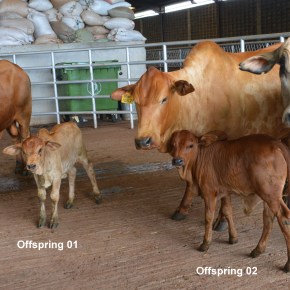
Kenyan cattle found to have much smaller faecal carbon footprints than those used in climate change inventories
Greenhouse gases emitted by Kenyan cattle excreta are found to be much lower than estimates derived from models in industrialized countries. Continue reading
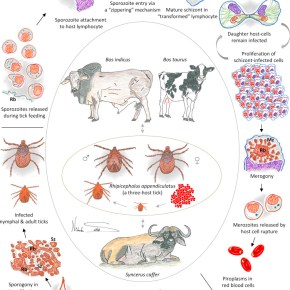
Vaccine research on Africa’s cattle-killing East Coast fever: A short (somewhat potted but handsomely illustrated) history
Tremendous research progress has been made over the last ten years to better control the deadly African disease of cattle known as East Coast fever. This disease is caused by a single-celled organism, Theileria parva, which is carried by some tick species. Cattle become infected when a tick carrying the parasite takes a blood-meal from the animal over several days. Continue reading
Odisha Odyssey: A look at the emerging commercial dairy value chains in eastern India
In recent years, ILRI scientists have been working with institutional partners and local farmer organizations in Odisha, a large eastern state of India on the Bay of Bengal, on research to improve the feed and fodder resources readily available to smallholder livestock keepers. ILRI conducted this collaborative research through a collaborative CGIAR Cereal Systems Initiative for South Asia (CSISA) aiming to increase and sustain small farm productivity in selected regions of Bangladesh, India and Nepal.
As part of an ILRI photojournalism trip to India undertaken in early Mar 2016, the authors visited a town on the outskirts of Bhadrak, a city in northern Odisha, to capture a bit of what the ILRI-led CSISA work has accomplished for small-scale dairy farmers in the area. Continue reading
Building better brands and lives through peri-urban dairying and smart crop-dairy farming
The fourth in a series of articles on ‘Curds and goats, lives and livelihoods—A dozen stories from northern and eastern India’.
PART 4: Culture of the cow: Curds of the village—Building better brands and lives through peri-urban dairying Continue reading
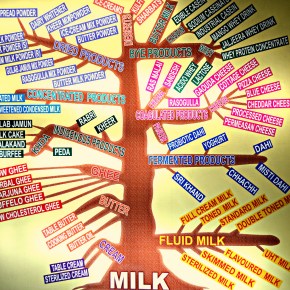
Culture of the cow: Curds in the city—Better living through smallholder dairying in northern India
This is the third in a series of articles on ‘Curds and goats, lives and livelihoods—A dozen stories from northern and eastern India’. Continue reading
Reverse vaccinology identifies candidates for an improved vaccine against cattle pneumonia in Africa
We used a reverse vaccinology approach to identify 66 Mmm potential vaccine candidates. The selection and grouping of the antigens was based on the presence of specific antibodies in sera from CBPP-positive animals. The antigens were used to immunize male Boran cattle (Bos indicus) followed by a challenge with the Mmm strain Afadé. Continue reading